
Chicken Handi vs Chicken Karahi: What’s the Difference?
Chicken Handi vs Chicken Karahi: What’s the Difference?
At almost every Pakistani table in Abu Dhabi, someone looks up from the menu and asks the same question: “Should we get the handi or the karahi?” Both are chicken curries. Both arrive steaming and are eaten with hot naan. Both are among the most-ordered dishes at Desi Downtown on Al Falah Street. Yet they are very different dishes, cooked in different pots, with different textures and very different personalities. This guide explains the difference between chicken handi and chicken karahi so you can order the one that suits your mood, your group and your spice level.
What Is Chicken Handi?
A handi is a deep, round-bellied cooking pot with a narrow neck. Traditionally it was made of clay, and later of copper or brass. The shape matters. Because the pot is deep and the opening is narrow, moisture stays inside and the food cooks gently in its own steam. That is why handi dishes are known for being rich, smooth and slow-cooked.
Chicken handi is usually made with boneless chicken pieces. The base starts with onions, ginger and garlic, then yoghurt and warm spices such as cumin, coriander and garam masala. Towards the end, cream or butter is often stirred in, which gives handi its signature silky, pale-orange gravy. Many versions finish with a sprinkle of fresh coriander, green chillies and a spoon of cream on top.
The result is a mellow, creamy curry with a thick gravy that clings to naan. It is comforting rather than fiery. If you like butter chicken but want something more home-style and less sweet, chicken handi is usually the dish you are looking for.
What Is Chicken Karahi?
A karahi is a wide, shallow, heavy-bottomed wok with two handles. Where the handi is about slow steam, the karahi is about high heat and fast cooking. The wide surface lets moisture escape quickly, so the sauce reduces and the flavours concentrate.
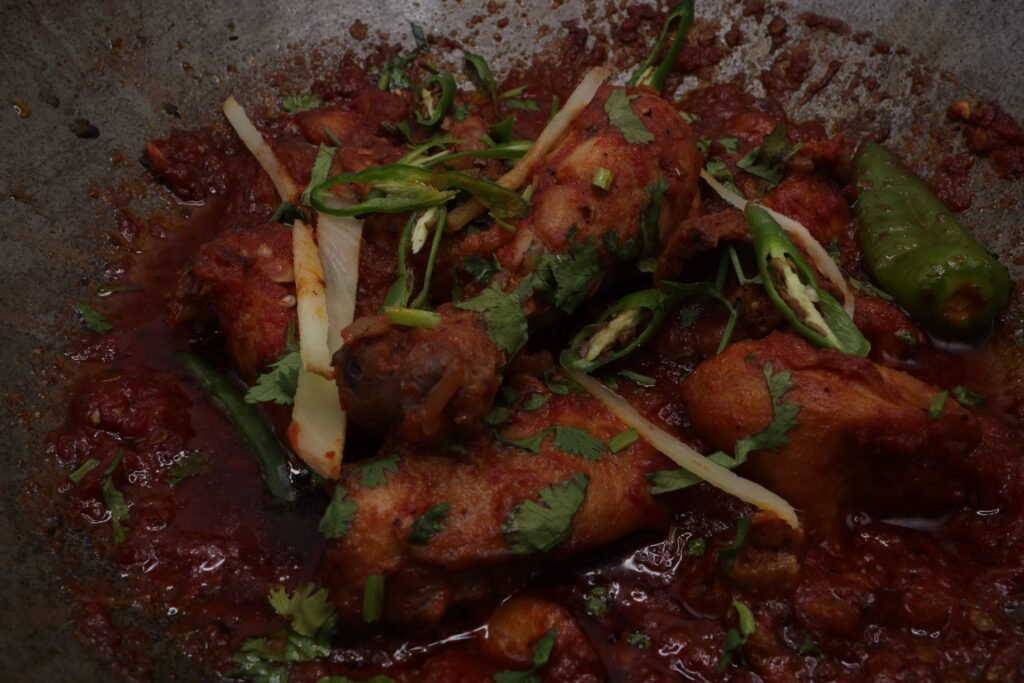
A classic chicken karahi is built on tomatoes, not cream. Bone-in chicken is seared in oil or ghee, then tomatoes are added and cooked down until they break into a thick, glossy masala. Ginger, garlic, black pepper, crushed red chilli and green chillies do most of the work. The dish is finished with julienned ginger and fresh coriander, often served in the same karahi it was cooked in.
Chicken karahi tastes brighter and bolder than handi. The gravy is thicker and less saucy, the chicken is often on the bone for extra flavour, and the heat comes through clearly. It is the dish that Pakistani families order for gatherings, and it has regional variations, from simple Peshawari karahi with little more than salt, tomato and fat, to spicier Lahori styles.
Chicken Handi vs Chicken Karahi: Side by Side
Here is the quick comparison most diners want before they order:
- Cooking pot: handi uses a deep, narrow pot for slow cooking; karahi uses a wide, shallow wok for fast, high-heat cooking.
- Base: handi is built on yoghurt, onion and cream; karahi is built on tomatoes, ginger and garlic.
- Texture: handi is smooth, creamy and saucy; karahi is thick, reduced and slightly oily, in a good way.
- Chicken: handi is usually boneless; karahi is traditionally bone-in, though boneless versions exist.
- Spice: handi is mild to medium; karahi is medium to hot, with more black pepper and green chilli.
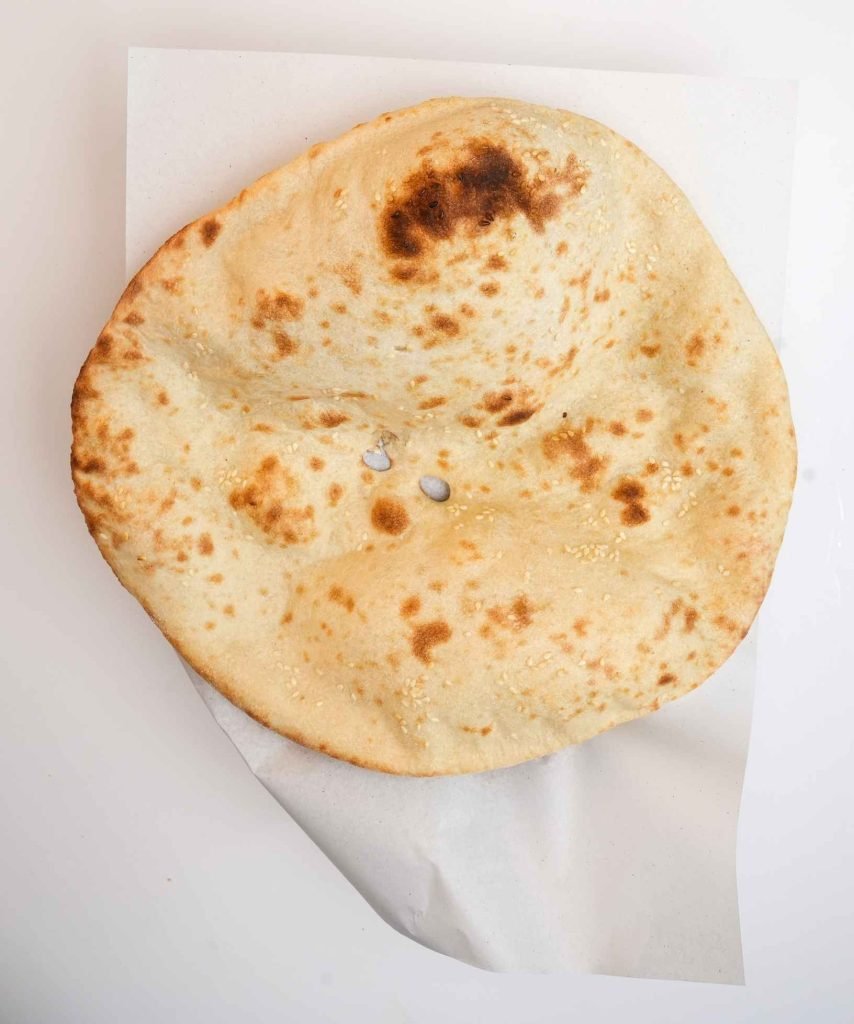
- Best bread: handi pairs well with butter naan or garlic naan; karahi is best with plain naan or roghni naan to scoop up the masala.
- Cooking time: a fresh karahi is usually cooked to order and can take a little longer, because the tomatoes need time to reduce properly.
Neither dish is “better”. They simply suit different cravings.
Which One Should You Order?
The right choice depends on who is at the table and what kind of meal you want.
Choose chicken handi if you prefer mild food, you are ordering for children or guests who are new to Pakistani cuisine, or you want a creamy curry to share with rice. Handi is also a good choice for office lunches, because it travels well and stays soft and saucy.
Choose chicken karahi if you want bold, peppery flavour, you enjoy eating chicken on the bone, or you are sitting down for a proper family dinner. Karahi is the centrepiece dish of many Pakistani celebrations, and it is at its best eaten fresh, straight from the pan.
Ordering for a group? Many tables in Abu Dhabi solve the dilemma by ordering both: one handi and one karahi, with a basket of mixed naan in the middle. That way, the spice-lovers and the mild-food fans are both happy, and everyone gets to taste the difference for themselves.
Handi and Karahi at Desi Downtown, Al Falah Street
Since 2017, Desi Downtown has been serving home-style Pakistani food to families, office workers and food lovers across Abu Dhabi. Our restaurant sits on Al Falah Street in Al Danah, beside the ADNOC station near Jawazat and the Sudani Club. That puts us within a short drive of Tourist Club, Al Markaziyah, Madinat Zayed, Al Khalidiyah and Al Reem Island.
Our chicken handi and chicken karahi are both cooked in our kitchen using the traditional methods described above: slow and creamy for the handi, fast and tomato-rich for the karahi. You can enjoy them in our family dining area or private dining room, order for pickup, or have them delivered to your home or office. Pair either one with fresh naan from our tandoor, a side of raita and a simple salad, and you have a complete Pakistani meal.
Frequently Asked Questions
Is chicken handi spicier than chicken karahi?
No. Chicken handi is usually the milder dish because of the yoghurt and cream in the gravy. Chicken karahi uses more black pepper, green chillies and red chilli, so it tastes hotter. Both can be adjusted, so ask for mild or extra spicy when you order.
Which goes better with naan or rice?
Both dishes are traditionally eaten with naan. Handi’s creamy gravy also works very well with plain rice. Karahi’s thick masala is best scooped up with plain or roghni naan.
How long does a fresh karahi take to cook?
A properly made karahi is cooked to order so the tomatoes can reduce into a thick masala. It may take a little longer than a ready curry. If you are in a hurry, call ahead or order online in advance.
Order Chicken Handi or Karahi in Abu Dhabi
Can’t decide? Try both. Visit Desi Downtown on Al Falah Street, reserve a table on our website, or order online for pickup and delivery across Abu Dhabi. Call us on +971 54 990 8494 and we’ll help you choose the right dish for your table.
Leave a Reply