
What is Haleem
Haleem: Why This Dish Takes 8 Hours to Make
Some dishes are quick. Haleem is not one of them. This thick, rich stew of wheat, lentils and meat is cooked slowly for hours until everything melts together into a smooth, almost porridge-like texture. It is one of the most loved dishes in Pakistan, eaten on weekends, during Ramadan and on special occasions. For Pakistani families in Abu Dhabi, a bowl of haleem topped with fried onions and lemon is pure comfort. In this guide we explain what haleem is, why it takes so long, and how to enjoy it.
What Is Haleem?
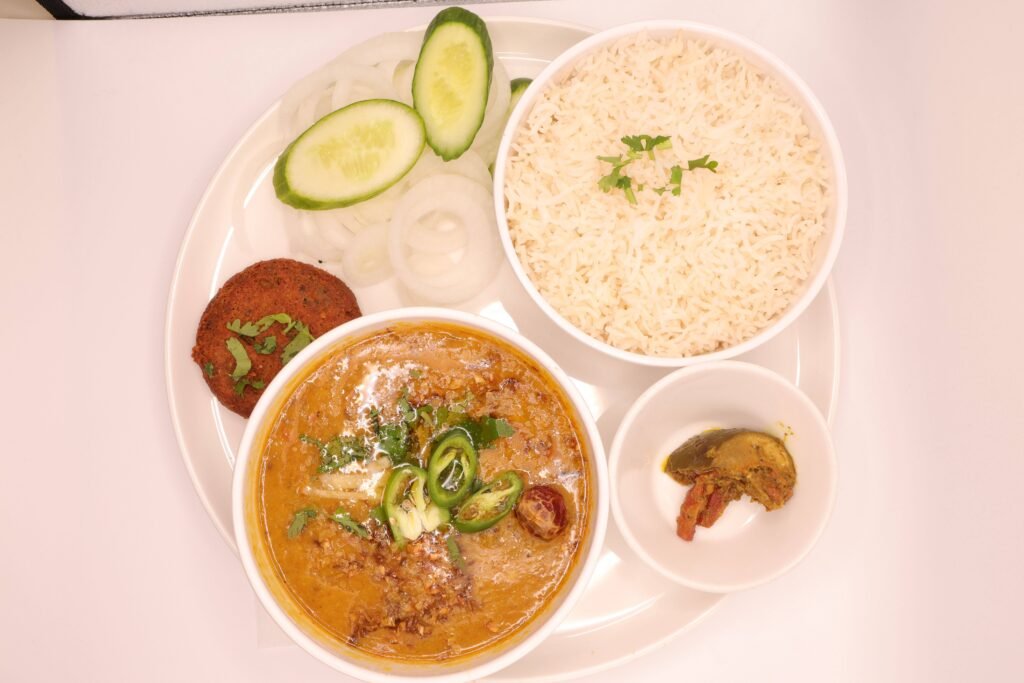
Haleem is a slow-cooked dish made from four main ingredients: wheat, barley, lentils and meat. The grains are soaked, then cooked until very soft. The meat, usually chicken, beef or mutton, is cooked separately with onions, ginger, garlic and spices until tender. The two are then combined and cooked together for a long time, with constant stirring and mashing, until the grains and meat blend into one thick, smooth mixture.
The spices are warm and deep rather than sharp: coriander, cumin, turmeric, red chilli, black pepper and garam masala. The finished haleem should be thick enough to hold its shape on a spoon, with fine strands of meat running through it. It is hearty, filling and full of flavour.
Why Haleem Takes So Long
The reason haleem takes so long is simple. Grains and lentils need a long time to break down completely, and meat needs a long time to fall apart into fibres. Making haleem properly can take many hours from start to finish.
The most important part of the process is called ghotna. This is the long stirring and pounding of the haleem with a heavy wooden tool, also called a ghotna. It breaks down the meat into fine threads and blends it with the grains. Traditionally, this is hard physical work, and in Pakistan it is common to see cooks taking turns at big pots of haleem.
Rushing haleem shows. If it is not cooked long enough, the grains stay grainy, the lentils taste raw and the meat stays in chunks. Properly made haleem is silky, thick and completely unified, with no single ingredient standing out.
Haleem, Harees and Khichra: What’s the Difference?
Haleem has close cousins across the region, and people in Abu Dhabi often ask how they differ.
Harees is the Arabian dish that many Emiratis know well, especially during Ramadan. It is made from wheat and meat, cooked slowly and beaten smooth, but it is usually lightly spiced and seasoned mainly with salt and ghee. It is gentler and whiter in colour than haleem.
Khichra is a South Asian dish very close to haleem. It is typically made with larger pieces of meat, often mutton or beef, and has a slightly chunkier texture. Some families use the names interchangeably.
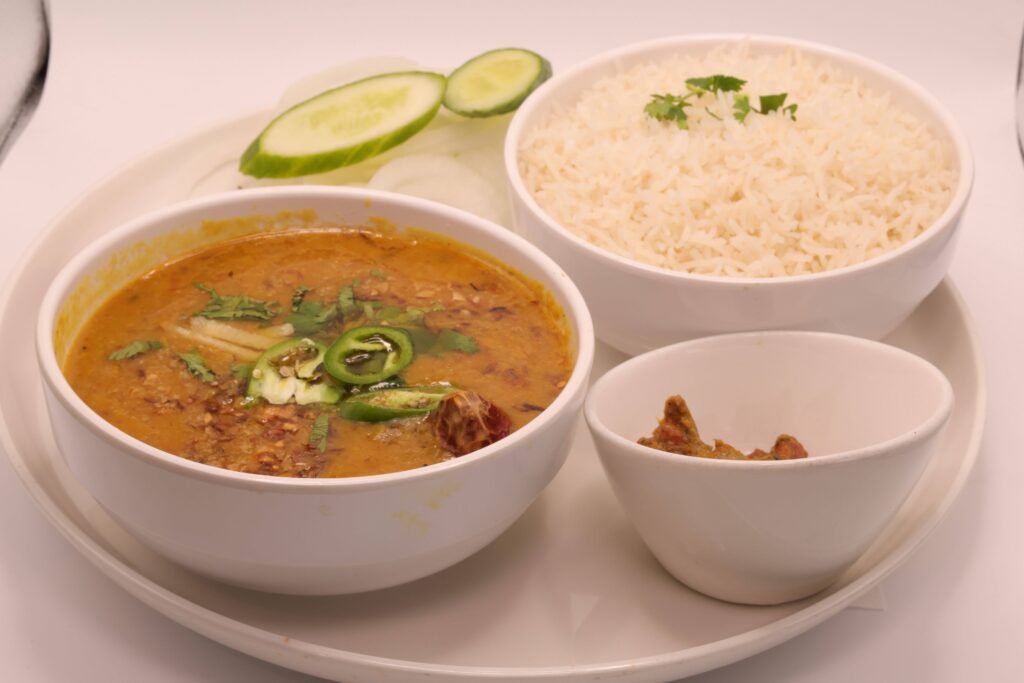
Pakistani haleem sits in the middle: smooth like harees, but with the bold spicing of a South Asian curry and plenty of toppings.
The Toppings That Make It
Haleem is served plain and finished at the table with toppings. They are not optional extras; they are part of the dish. The classic toppings are:
- Crispy fried onions (birista), for sweetness and crunch.
- Fresh lemon juice, to lift the richness.
- Thin strips of fresh ginger.
- Chopped green chillies and fresh coriander.
- A sprinkle of chaat masala or garam masala.
- A spoon of hot oil or ghee on top, for those who like it rich.
Mix everything in, take a piece of naan, and scoop. Many people prefer haleem with naan, while others eat it with a spoon on its own.
Haleem Through the Year
In Pakistan, haleem is eaten year-round, but it has special importance at certain times. During Ramadan it is popular at iftar because it is filling and nourishing after a day of fasting. It is also traditionally cooked and shared during Muharram. On weekends, families often order haleem for a slow, relaxed lunch.
In Abu Dhabi, haleem is a favourite for Friday and weekend family meals, and during Ramadan demand rises sharply. Because it takes so long to prepare, it is always a good idea to order early.
Tips for Ordering and Enjoying Haleem
A few simple tips will help you get the most from your haleem, whether you eat in or order for home.
- Order early on weekends and during Ramadan. Haleem is made in batches, and popular times can sell out.
- Keep the toppings separate until you eat. Fried onions stay crisp and lemon stays fresh when added at the table.
- Reheat gently. Haleem thickens as it cools. Warm it slowly with a splash of water and stir well.
- Pair it with plain naan or sheermal. The slightly sweet sheermal is a lovely match for rich haleem.
- Balance the table. Haleem is heavy, so a fresh salad or raita alongside makes the meal feel lighter.
If you are hosting guests, haleem is also easy to serve. Place it in a large bowl in the centre of the table with small bowls of toppings around it, and let everyone finish their own portion the way they like it.
Frequently Asked Questions
Is haleem healthy?
Haleem is a filling, balanced dish that contains grains, lentils and meat, so it provides protein, fibre and energy. It can be rich, especially with extra ghee and fried onions, so enjoy it as part of a balanced diet.
What is the difference between haleem and harees?
Both are slow-cooked wheat and meat dishes. Harees is lightly seasoned and mild, while haleem includes lentils and barley and is flavoured with South Asian spices, then served with toppings like fried onion and lemon.
How much haleem should I order per person?
As a main dish with naan, a generous bowl per person is usually enough. For families, a 500g or 1kg portion works well for sharing. Haleem is very filling, so most people eat less than they expect.
Is chicken haleem different from beef haleem?
Chicken haleem is lighter and slightly milder. Beef and mutton haleem are richer and deeper in flavour. The method and toppings are the same.
Order Haleem in Abu Dhabi
At Desi Downtown on Al Falah Street, our chicken haleem is cooked slowly and served with all the classic toppings. Order a single portion, or 500g and 1kg sizes for the family, for dine-in, pickup or delivery across Abu Dhabi. Visit us near Jawazat in Al Danah, order on our website, or call +971 54 990 8494.
Leave a Reply