
Pakistani Korma vs Indian Korma
Pakistani Korma vs Indian Korma | Chicken Korma Abu Dhabi
Many people who order korma for the first time in a Pakistani restaurant are surprised. They expect the pale, creamy, slightly sweet curry they have had in British or Indian restaurants. Instead, they get a rich, dark, aromatic dish with a layer of oil on top and a real depth of spice. Both are called korma, but they are very different dishes. This guide explains what Pakistani korma is, how it differs from the restaurant-style korma many people know, and how to enjoy it.
Why Pakistani Korma Surprises People
The word korma comes from the Urdu and Hindi word for braising. At its heart, a korma is meat braised slowly in yoghurt and spices. That basic idea is shared across the region, but the way it is cooked varies enormously.
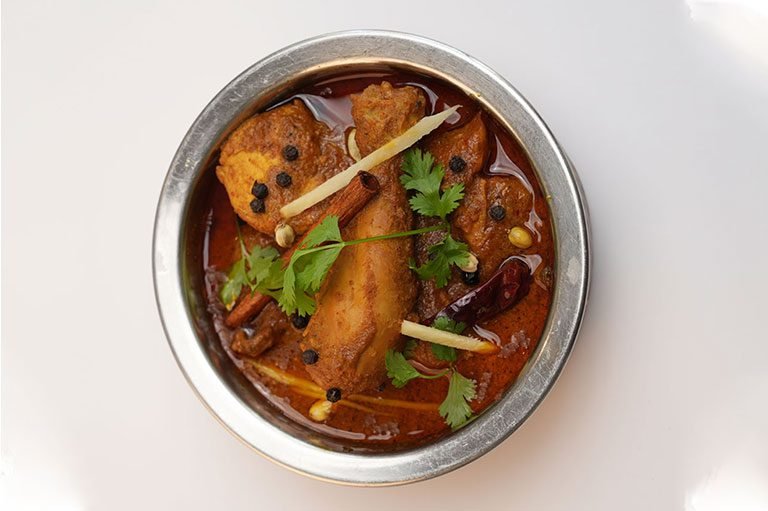
In the West, korma became known as one of the mildest curries on the menu: creamy, nutty and sweet, often made with coconut or cream. That version was designed to suit people who were new to South Asian food.
In Pakistan, korma is a celebration dish. It is served at weddings, Eid and family gatherings. It is rich, fragrant and full-bodied. It is not especially hot, but it is certainly not bland.
Pakistani Korma: Fried Onion, Yoghurt and Oil on Top
A Pakistani chicken korma begins with onions sliced thinly and fried slowly until deep golden brown. This is the most important step. The fried onions (birista) are often crushed or blended into a paste and give korma its dark colour, natural sweetness and rich flavour.
The chicken, often on the bone, is cooked with ginger and garlic, whole spices such as green and black cardamom, cloves, cinnamon and bay leaves, then ground spices including coriander, red chilli and a little turmeric. Whisked yoghurt is added and cooked down slowly until the oil separates from the masala. The fried onion paste goes in, along with a sprinkle of garam masala, and sometimes a few drops of kewra water for fragrance.
The finished korma has a thick, smooth, brown gravy with a glossy layer of oil on top. That oil, called tari, is a sign that the masala has been cooked properly. The flavour is aromatic and rounded, with gentle warmth from the spices and depth from the fried onions.
Indian and Restaurant Korma: Cream, Nuts and Sweetness
Restaurant-style korma, as known in the UK and many international restaurants, is usually made with boneless chicken in a pale sauce of cream, ground almonds or cashews, coconut and sometimes sugar. It is very mild and often slightly sweet.
In India, korma varies by region. Mughlai kormas from North India can be rich with nuts and cream, while South Indian kurmas often use coconut and vegetables. Many of these are quite different from the fried-onion style most common in Pakistan.
The simplest way to understand the difference is this: restaurant korma is creamy and pale; Pakistani korma is aromatic and brown.
Shadi Korma: The Wedding Classic
In Pakistan, one of the most famous versions is shadi korma, or wedding korma. At big weddings, huge pots of korma are cooked by professional cooks and served with naan or sheermal to hundreds of guests. Shadi korma is known for its generous layer of oil, rich fried-onion gravy and tender meat, usually mutton or chicken.
For many Pakistanis, the smell of korma instantly brings back memories of wedding feasts. That is why it is a popular choice for family gatherings and special occasions in Abu Dhabi too.
What to Eat Korma With
Korma is best eaten with bread. The rich gravy is perfect for scooping up with:
- Plain naan or roghni naan from the tandoor.
- Sheermal, a slightly sweet saffron bread that is the classic partner for wedding korma.
- Taftan, another soft, lightly sweet bread.
Korma can also be eaten with plain rice or zeera rice, and at weddings it is often served alongside biryani. A simple salad and raita complete the meal.
Korma for Guests: How Much to Order
Korma is an excellent dish for hosting because it is rich and filling, and it suits most tastes. As a rough guide:
- For two people, one portion of korma with naan, plus a daal or vegetable dish, is plenty.
- For four people, order one korma and one other main, such as karahi or biryani, plus bread and salad.
- For larger gatherings, plan korma as one of two or three mains, and speak to our team about bulk orders.
How to Tell a Good Korma
A well-made Pakistani korma has a few clear signs. The gravy is smooth and thick, not watery. The oil has separated and sits on top. The chicken is tender and has absorbed the flavour of the masala. And the aroma of cardamom, fried onion and warm spices hits you the moment the lid comes off.
If the korma tastes sharp or raw, the yoghurt and spices have not been cooked long enough. Good korma always tastes mellow and rounded.
Order Chicken Korma in Abu Dhabi
At Desi Downtown on Al Falah Street, our chicken korma is cooked in the Pakistani style, with fried onions, yoghurt and whole spices. It is a favourite for family dinners and gatherings. Enjoy it in our restaurant or private dining room in Al Danah, near Jawazat, or order online for pickup and delivery to Al Khalidiyah, Al Bateen, Al Mushrif and across Abu Dhabi. Call +971 54 990 8494 to order. Online orders on desidowntown.com get 20% off.
Frequently Asked Questions
Is Pakistani korma spicy?
Pakistani korma is aromatic and warmly spiced, but it is usually mild to medium in heat. It is not as hot as a karahi, but it has much more flavour than a Western-style korma.
Why is there oil on top of korma?
The layer of oil, called tari, appears when the yoghurt and spices have been cooked long enough for the fat to separate. It is a sign of a properly cooked korma. You can skim it off or mix it in, depending on your preference.
What bread goes best with korma?
Sheermal is the traditional partner, especially for wedding-style korma. Plain naan, roghni naan and taftan are also excellent choices.
Is Pakistani korma sweet?
Not really. It has a gentle natural sweetness from the fried onions, but it does not contain sugar or coconut like some restaurant-style kormas.
Leave a Reply