
Peshawari-Karahi-vs-Lahori-Karah
Peshawari-Karahi-vs-Lahori-Karah Peshawari karahi is one of the most loved dishes in Pakistani cuisine, and it is very different from the spicy Lahori karahi many people know. Karahi is named after the pan it is cooked in, a wide, heavy wok with two handles, and it is the dish that brings families and friends together around the table. But karahi is not a single recipe. Travel from Peshawar to Lahore, and you will find very different versions. Some are simple and meaty, some are fiery and complex, and some are pale and creamy. This guide explains the main styles, so the next time you order karahi in Abu Dhabi, you know exactly what to expect.
One Wok, Many Regions
Every karahi starts the same way: meat seared in a hot pan, then cooked quickly with tomatoes and aromatics until the sauce reduces to a thick, glossy masala. The high heat and wide pan are key. They allow moisture to evaporate fast, concentrating the flavour and giving the meat a slightly caramelised edge.
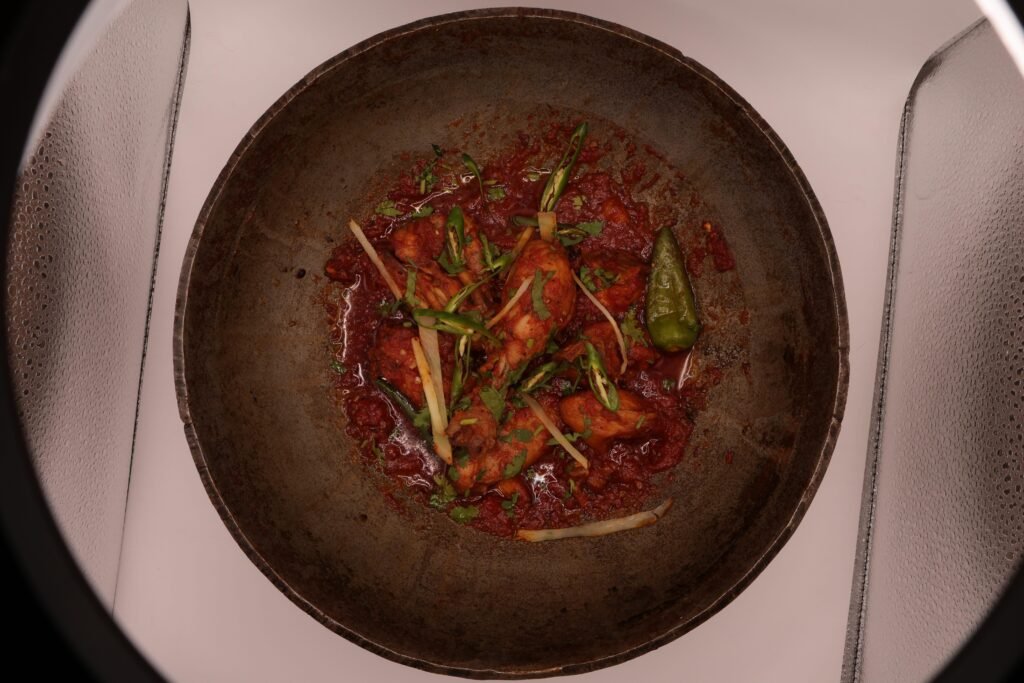
From there, each region adds its own character. The three styles you are most likely to meet in Abu Dhabi are Peshawari karahi, Lahori karahi and white karahi.
Peshawari Karahi: Salt, Tomato, Fat and No Fuss
Peshawari karahi comes from Peshawar and the Khyber Pakhtunkhwa region. It is famous for its simplicity. The traditional recipe uses very few ingredients: meat, usually mutton or lamb, fresh tomatoes, green chillies, salt, black pepper and fat.
The meat is cooked in its own fat or in animal fat until browned, then tomatoes are added whole or halved and cooked down until their skins can be pulled off. The tomatoes break into a thick sauce that coats the meat. There is often no onion, no ginger-garlic paste and very few ground spices. Black pepper and green chilli provide the heat.
The result is a clean, meat-forward dish where the flavour of good mutton shines through. Peshawari karahi is often ordered by weight, half kilo or one kilo, and cooked fresh in front of customers at traditional restaurants. It is served with fresh naan and a simple salad.
Lahori Karahi: Spice, Ginger and Green Chilli
Lahore, the food capital of Punjab, has its own take on karahi. Lahori karahi is more complex and more heavily spiced than Peshawari karahi.
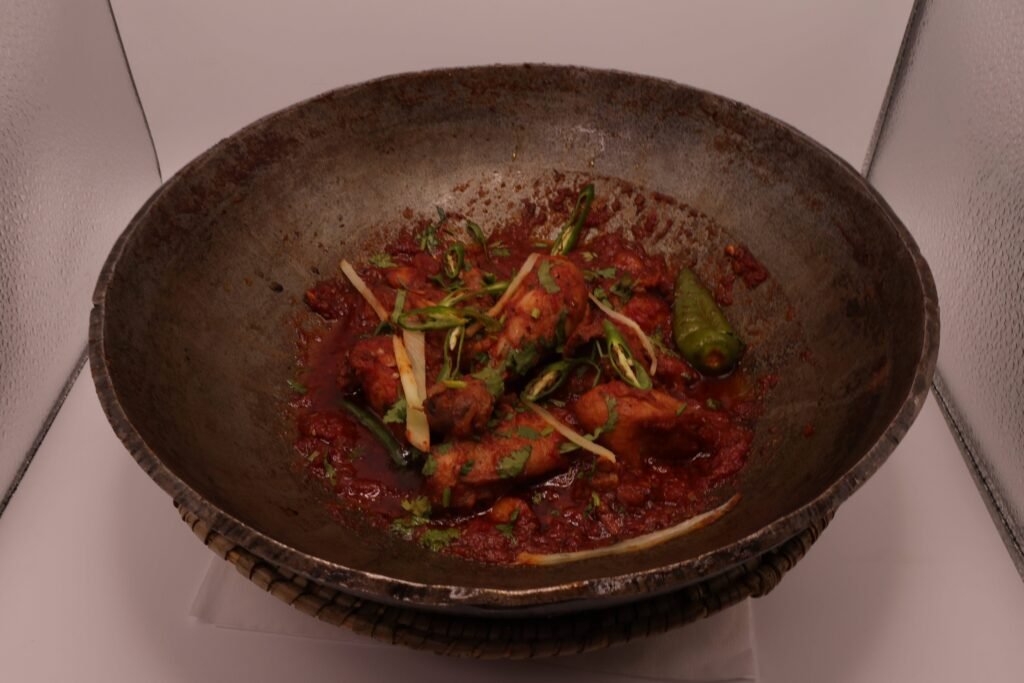
It typically starts with ginger and garlic, then tomatoes, then a blend of ground spices including red chilli, coriander, cumin and garam masala. Yoghurt is sometimes added for tang and body. The dish is finished with plenty of julienned ginger, sliced green chillies and fresh coriander, often with a final spoon of butter or ghee.
Lahori karahi is bold, spicy and aromatic. It is the style many people picture when they think of chicken karahi, and it is hugely popular in Pakistani restaurants across the Gulf.
Peshawari Karahi vs Lahori Karahi: Quick Comparison
- Ingredients: Peshawari karahi uses meat, tomato, salt, black pepper and green chilli; Lahori karahi adds ginger, garlic and a blend of ground spices.
- Spice: Peshawari karahi is peppery and clean; Lahori karahi is hotter and more aromatic.
- Meat: Peshawari karahi is usually mutton or lamb; Lahori karahi is often chicken.
- Finish: Peshawari karahi lets the meat shine; Lahori karahi is topped with ginger, chilli, coriander and butter.
Namak Mandi and White Karahi
Two other styles are worth knowing.
Namak mandi karahi takes its name from the Namak Mandi food street in Peshawar. It is very close to Peshawari karahi: simple, salt-and-pepper forward, and focused on the quality of the meat, often lamb.
White karahi, sometimes called safed karahi, is a creamy version made without tomatoes and red chilli. Instead, the meat is cooked with yoghurt, cream, black pepper, green chillies and ginger. It is pale in colour, rich and mildly spiced, with a peppery warmth. White karahi is a good choice for anyone who wants karahi flavour without too much chilli heat. If you prefer creamy curries, you may also enjoy our Chicken handi.
Mutton vs Chicken Karahi
Karahi can be made with mutton, lamb, beef or chicken.
Mutton karahi is the traditional choice, especially for Peshawari karahi. The meat is rich and flavourful, and the fat adds depth to the sauce. It takes longer to cook, but the result is worth the wait. At Desi Downtown you can order mutton karahi by the kilo, in half-kg and 1kg portions.
Chicken karahi is lighter, faster to cook and more affordable. It is the everyday favourite in Lahori style, and it suits most tastes. Not sure whether you want karahi or a milder curry? Read our chicken handi vs karahi guide.
Peshawari-Karahi-vs-Lahori-Karah For a group, ordering one mutton and one chicken karahi is a popular way to enjoy both.
Why Fresh Peshawari Karahi Takes Time
A properly made karahi is cooked to order. The meat needs to be seared, the tomatoes need time to break down, and the sauce needs to reduce until it is thick and glossy. For chicken this can take a little while; for mutton it takes longer, because the meat must become tender.
That is why many Karahi Restaurants in Abu Dhabi suggest ordering in advance, especially for mutton karahi by the kilo. The wait is part of the experience, and the result is a karahi that tastes fresh and vibrant rather than reheated. To skip the wait, reserve a table and pre-order your karahi.
How to Enjoy Karahi
Karahi is traditionally served in the pan it was cooked in, placed in the centre of the table. Everyone tears pieces of naan and eats directly from the karahi. Salad, mint raita and lemon wedges are the usual sides. Many people finish the meal with doodh patti chai.
Order Peshawari Karahi in Abu Dhabi
At Desi Downtown on Al Falah Street, our Peshawari mutton karahi and chicken karahi are cooked fresh, the traditional way. Looking for the best Pakistani karahi in Abu Dhabi? Visit us in Al Danah near Jawazat, pre-order for your group, or order online for pickup and delivery to Al Khalidiyah, Al Reem, Mussafah and across Abu Dhabi. Call +971 54 990 8494. Order online on desidowntown.com and get 20% off your online order.
Frequently Asked Questions
What makes a karahi Peshawari?
Peshawari karahi is simple, with meat, tomatoes, salt, black pepper and green chillies cooked in fat. It usually has no onion and very few ground spices, so the meat flavour stands out.
Why does fresh karahi take 30 minutes or more?
Fresh karahi is cooked to order. The meat must be seared and the tomatoes reduced into a thick masala, and mutton needs extra time to become tender. Ordering ahead can reduce your wait.
Is white karahi spicy?
White karahi is mild in chilli heat but has a peppery warmth from black pepper and green chillies. Its creamy sauce makes it gentler than Lahori karahi.
Is karahi ordered by weight?
Often, yes, especially mutton karahi. Half-kilo and one-kilo portions are common, making it easy to order for groups.
Can I order Peshawari karahi online?
Yes. You can order online for pickup or delivery across Abu Dhabi, and online orders on our website get 20% off.
Leave a Reply